![[personal profile]](https://www.dreamwidth.org/img/silk/identity/user.png) eulalia
eulalia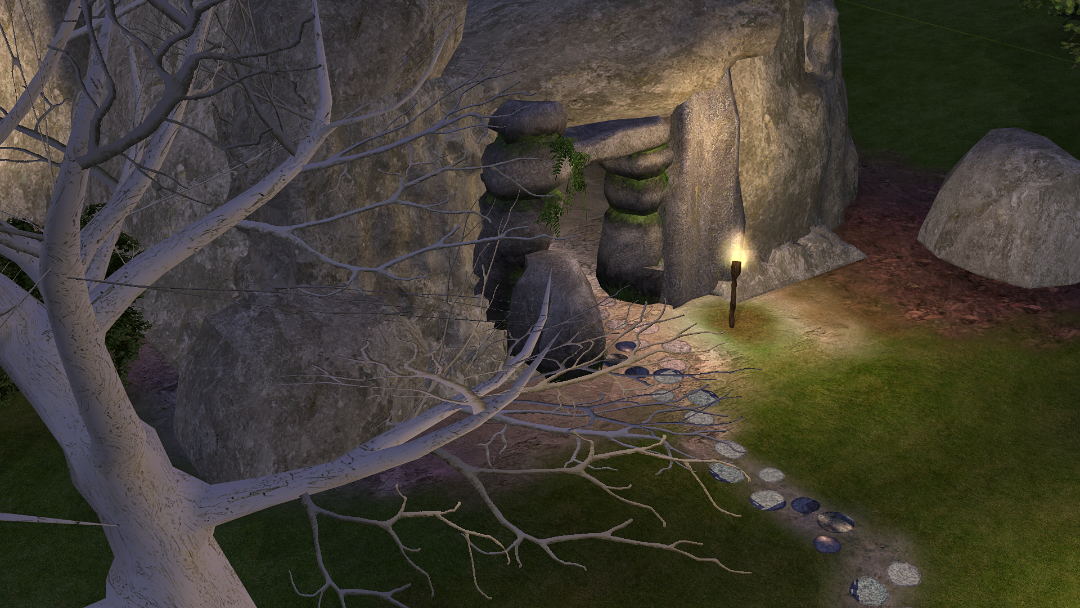 katatty asked me a question about Cadwgan and his priestly desires, and I was like, what if I write 1800+ words about this?
A quick note to reduce confusion: Veridia is the name of the village; Abona is the kingdom it belongs to; Abona is a part of Avalon, which is an island blatantly copying Great Britain. All of this was inspired by a mix of Anglo-Saxon kingdoms and pre-Roman tribes.
Basics
- Religion is a bit loosey-goosey in this setting. The only real centralized authority in Abona is the king, who may take part in rituals but is not a religious figure in and of himself. Beliefs and practices vary from region to region.
- Priestesses and priests are not a necessity; laity can and do perform things like funerals, cleansings, beseeching a god, etc, and this is very common in rural areas. Veridia used to have an itinerant priest that tended the shrine, but he died prior to the start of the story, and the shrine is currently tended by a rotation of villagers.
Deities, Religious Orders, and Spirits
There are definitely more gods than these, but these are the ones I've actually put any thought into.
Belenus: IRL, a widespread Celtic god associated with healing. The one in this list we know the most about.
In Abona, Belenus is a god associated with healing and magic and is often invoked by those seeking good health. One of the shrines in Evervale is built around Bel's Tears, a spring which is purported to heal those who drink from it. Belenus has only dedicated acolytes, not priests, who reside within their shrines and rarely leave. Shrines to Belanus also operate as hospitals, taking in patients as needed.
Cernunnos: I'm forever misspelling this fucker's name. If you've seen me miss an N, no you didn't. Another Celtic god, often associated with the natural world. There's a sick-ass depiction of him on an artifact called the Gundestrup Cauldron where he's holding a huge snake for some reason.
In Abona, Cernunnos is a forest god associated with fertility and growth, said to take the form of an antlered man or large stag. One might make offerings to him when seeking a good harvest, luck at hunting, or a sexual partner. ( ͡° ͜ʖ ͡°) Cernunnos is more of a wild god and does not have priest(esses) or acolytes. Any shrines tend to be simple altars located outdoors near woodland and are collectively tended.
Andraste: believe it or not, not named after the Dragon Age prophet. I assume Andraste-the-prophet was named after Andraste-the-Iceni-goddess. IRL, Andraste is basically only known to us by Dio Cassius's recounting of Boudicca's uprising and is considered to be a goddess of war or battle.
In my made up world, Andraste is also a warrior goddess. She does not have set shrines, and typically sacrifices or offerings will be made somewhere convenient to whatever battlefield you're approaching. She does have itinerant priestesses—and only priestesses. sorry 2 the boys and enbies. (One does not have to be a cis woman, though; the only priestess of Andraste who's shown up in anything I've written so far is trans.) I feel like she may also be a goddess of childbirth.
Spirits: Readers of Veridia will have seen people invoking spirits or using them as an exclamation. So what are they? What AREN'T they? Spirits aren't deities, but more like the collective souls of places, elements, sometimes people. That big white tree outside the shrine in Veridia has a spirit. If an all-white hare jumps in front of you in the woods, that might be a spirit (and definitely not Fenrir the fae trying to trick someone again).
Spirits are said to be interested in humans, perhaps trying to figure them out or become more like them, and sometimes meddle in the real world as a result. Spirits may be benign or malicious. Residents in Veridia often place charms on a home's threshold to keep them out.
The basic belief in spirits is widespread in Avalon, but what those spirits may or may not do varies from place to place. In Veridia we have the magic spirit babies, but if you traveled across the island and told that story to someone else, they'd probably politely ask you if you were tripping balls or just a bit delusional.
Hooded Spirits: In Romano-Celtic artifacts, there are these figures referred to as Hooded Spirits. They're a little too Roman for me, but also it's hard to completely take the Roman influences out of this era and I just think they're neat. Sometimes they show up in sets of three. Why? Humans just like things to be in sets of three for some reason, idk.
In Abona and wider Avalon, hooded spirits are associated with the Otherworld and liminal spaces; they are boundary-crossers. Seeing one is an omen, but what sort varies on the context. Places one might expect to see a hooded spirit include bogs, a cave/shrine like the one in Veridia, anywhere the ~*~boundary between worlds~*~ is thin, or someone's deathbed.
The Otherworld
"Eulalia," you say, "what is this Otherworld you keep mentioning?" Good question. It's an Indo-European religious motif that varies from culture to culture (shocking, I know). If you like Celtic mythology, you may be familiar with Annwn.
Like spirits, the Otherworld is a widespread concept in and outside of Abona. The most common interpretation is that it is a world running directly parallel to our own, unable to be reached by the living except under rare and extreme circumstances. It is where spirits and the dead both reside, and is considered to be a land of plenty and comfort.
The Otherworld is also believed to be the source of magic in the real world. Witches believe there is a boundary between the two worlds and that it is less strong in some places than others, which lets magic seep into the real world (Arturo considers the woods around Veridia to be such a site; others state that the shrine in the cave is another). Wyll, the town in western Abona where Helenet/Orla/etc come from, is allegedly built atop such a place, hence the preponderance of witches.
The Watcher
We'll learn a tiny bit more about this soon from Cadwgan, but until then: I read the wiki pages about the Peteran and Jacoban churches in TSM and immediately forgot everything. Basically I just stole the name and the eye iconography. It's inspired by the early Christian church and the Christianization of England more than anything. ¯\_(ツ)_/¯
The Watcher is a god whose cult began on the continent and has slowly been gathering steam. The Watcher is said to have created the world and its creatures and people. The main religious text is called the Parables, which were supposedly written by a prophetess said to be possessed by the spirit of the Watcher themself, wishing to speak to their creation. The Parables urge followers to live a life of good works and contemplation, and state that all are equal in the eye of the Watcher and thus all must become equal in life, and the Watcher will bless the world when this is so. Hoarding of wealth is verboten, as are concept such as slavery or caste or class systems.
Priest(esses) of the Watcher live a simple life studying the Parables and tending to church-goers. They are encouraged to spread the Watcher's word. Priests are also meant to live ascetically in all ways. They may enter service with a spouse, but are supposed to remain chaste even within marriage.
Cadwgan refers to the Watcher's houses of worship as temples, but on the continent they're called kirika... aka church. (Started with kirke and followed the etymology to what Wiktionary tells me is reconstructed Proto-West German. I make no claims about the accuracy of this.)
Random tidbits
- Priests/priestesses/dedicated acolytes cannot hold land or titles in Abona. Typically they are provided for either by the king or collectively by the people.
- Offerings at a shrine might include coins or jewelry, food, herbs, small trinkets, or a bit of your own blood. At an untended shrine like in Veridia, it's left up to your own discretion. Animal sacrifices take place from time to time but are less common.
- Veridia traditionally burns their dead, and it's considered bad luck to speak the name of someone who has died before their pyre has been lit. If you do, it may draw their spirit's attention and keep them from moving into the Otherworld.
- festivals and holidays in Veridia roughly correspond to the equinoxes and solstices, and are not associated with any one god or goddess. They're more a recognition of the turning seasons than anything.
- On that note, here's a little thing about the spring festival I wrote in something else:
"It's tradition for couples or someone seeking a romantic partner to join the bonfire dance. Some of the more fanciful men and women take ashes from the cooled fire afterward to put in little pouches or bottles and fashion into love charms, claiming that if you do that, you'll be wed within a year. If it works, Norweni thinks it's only because doing it publicly is akin to standing on a crate in the middle of a market and shouting your intentions." - Marriages do not require witnesses or ceremony in Abona, though they often have them. The only requirements are that you are of age (20) and that you must be outside, where all the gods and spirits may see, to make your pledge. A handfasting ribbon (something that has no real historical basis but has wormed its way into my and others' medieval fantasy anyway) is often used; in Veridia, they're tied onto that big white tree in the stone circle afterward, but in other regions they might be burned or made into keepsakes.
Tags:


.jpg)